
Welcome to the Partisan Advertising blog.
The Partisan Advertising blog has advertising agency-related posts dating back to 2010 covering a vast array of topics.
When unique selling points mean nothing to consumers.
I was recently discussing unique selling points with a group of clients and which would matter the most to their customers and which one we should advertise.
It is my belief that the greatest unique selling points are single-minded in their promises, such as the best fuel economy or the most legroom of any airline. However, David Ogilvy’s legendary ad for Rolls Royce had 19.
Ogilvy's classic ad
And then we saw this ad from Cavalier Bremworth:
Fire-resistant carpeting sounds like a fantastic USP. But what happens when the rest of your house/apartment/office is burning down? When the ceiling ignites and the fire’s so hot it’s melting the microwave, would anyone really care that the carpet isn’t burning? Or burning less than everything else?
Does the idea of fireproof carpeting mean anything to consumers when they’re buying carpets? No one wakes up one-day thinking “today’s the day the house burns down, I better get fireproof carpets” so why market it?
Maybe someone at Cavalier Bremworth can let me know.
The Advertising Agency Pitch
If you spend large sums of your money on advertising, and if your profits are dependent on its efficiency, it is your duty to take great pains to find the best possible advertising agency.
If you spend large sums of your money on advertising, and if your profits are dependent on its efficiency, it is your duty to take great pains to find the best possible advertising agency.
Amateurs do it by cajoling a group of agencies into submitting free campaigns, on speculation. This is called a "Pitch". The agencies which win these "Pitches" are the ones which use their best brains for soliciting new accounts; they relegate their clients to their second-best brains. If I were a client, I would look for an agency which had no new business department. The best agencies don’t need them; they get all the business they can handle without preparing speculative campaigns.
The sensible way to pick an agency is to employ an advertising manager who knows enough about what is going on in the advertising world to have an informed judgment. Ask him to show you the work and commercials from the three or four agencies he believes to be best qualified for your account.
Then call some of their clients. This can be particularly revealing. Then invite the chief executive from each of the leading contenders to bring two of his key men to dine at your house. Loosen their tongues. Find out if they are discreet about the secrets of their present clients. Find out if they have the spine to disagree when you say something stupid. Observe their relationship with each other; are they professional colleagues or quarrelsome politicians? Do they promise you results which are obviously exaggerated? Do they sound like extinct volcanoes, or are they alive? Are they good listeners? Are they intellectually honest?
Above all, find out if you like them; the relationship between client and agency has to be an intimate one, and it can be hell if the personal chemistry is sour.
Should Brands Use Facebook?
Should Brands Use Facebook? There is no simple answer to this question.
Every form of mass media that has ever been used for advertising purposes was never created for advertising. When Tim Berners-Lee developed the Internet he didn’t do it so he could see ads popping up. Likewise for the inventors of the television, the radio, and the printing press. Advertising came along after the fact. And this is also true of Facebook.
Traditional marketing has always been about the numbers:
How many people are watching a TV show?
How many people read a magazine?
How many people listen to a radio station?
The bigger the numbers, the more advertisers are prepared to do to get in front of all those people. And that often means paying heaps to be there.
So you can imagine the excitement amongst the first global brands that advertised on Facebook a few years back. The numbers were huge and the cost to reach them was tiny when compared to producing and flighting an ad for the Superbowl.
But do those high numbers translate into sales?
Let’s look at an example.
I worked at one of New Zealand’s larger clothing companies. They were really good at measuring the effectiveness of their marketing material and they tracked all their printed and online activity meticulously
So one day we were in a meeting discussing Facebook, and one of the online account managers was very happy because the company had just racked up more than 15000 likes. This made everyone happy, especially top-level management. But those likes were not translating into sales. On average, only 2% of those likes purchased anything from the online store during any given month. And to make matters worse, the company routinely got an 80% or higher purchase rate from their mail-order catalogues.
There are possibly dozens of reasons for this, but the root of the problem is the fact that Facebook is an extremely social place, and thus it comes with its own, often volatile, cocktail of emotions. We go to Facebook to share our lives and to peak into the lives of others. It’s only logical that this environment will have a few psychological factors affecting it.
A recent study done by two German Universities proves this fact. According to their research, Facebook is rampant with envy simply because Facebook has produced an unprecedented platform for social comparison.
The researchers found that one in three people felt worse after visiting the site and more dissatisfied with their lives, while people who browsed without contributing were affected the most. Research showed that many people have a negative experience with Facebook in regards to envy, which leaves them feeling lonely, frustrated or angry, leading people to leave Facebook or at least reduce their use of the site.
The biggest causes of resentment were:
Vacation photos - with more than half of envy incidents triggered by holiday snaps on Facebook
Social interaction was the second most common cause of envy as users could compare how popular they were i.e. how many birthday greetings they received to those of their Facebook friends and how many "likes" or comments were made on photos and postings.
They found people aged in their mid-30s were most likely to envy family happiness
While women were more likely to envy physical attractiveness.
These feelings of envy were found to prompt some users to boast more about their achievements on Facebook and to portray themselves in a better light i.e. lie about themselves.
Men were shown to post more self-promotional content on Facebook to let people know about their accomplishments while women stressed their good looks and social lives.
The researchers said the respondents in both studies were German but they expected the findings to hold internationally as envy is a universal emotion.
They said, "From a provider's perspective, our findings signal that users frequently perceive Facebook as a stressful environment, which may, in the long-run, endanger platform sustainability.”
We all know that this research is true. Humanity is a social mix of dizzying highs and dreadful lows and it’s no more apparent than on Facebook.
So should brands be on Facebook?
What you need to consider is:
Why do you want to be on Facebook? If it's for the numbers or because everyone else is doing it then you've made the wrong choice.
How are you going to connect? E-Cards, pics of kittens and special offers aren’t enough
How will you measure it? Facebook and social media is barely 10 years old so the metrics change all the time.
Most important: If you stopped your Facebook activity, how would it impact your business? Does anybody care enough about you being on Facebook?
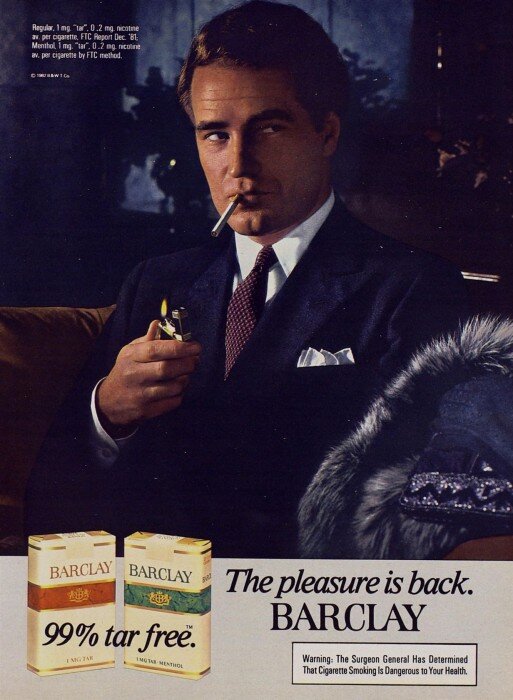
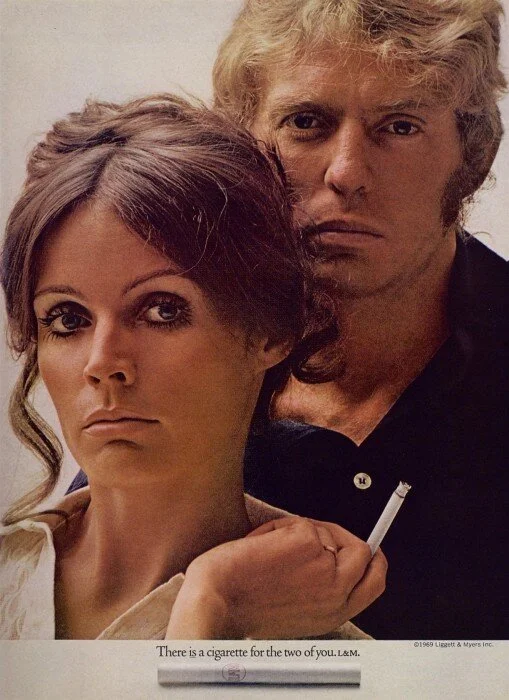
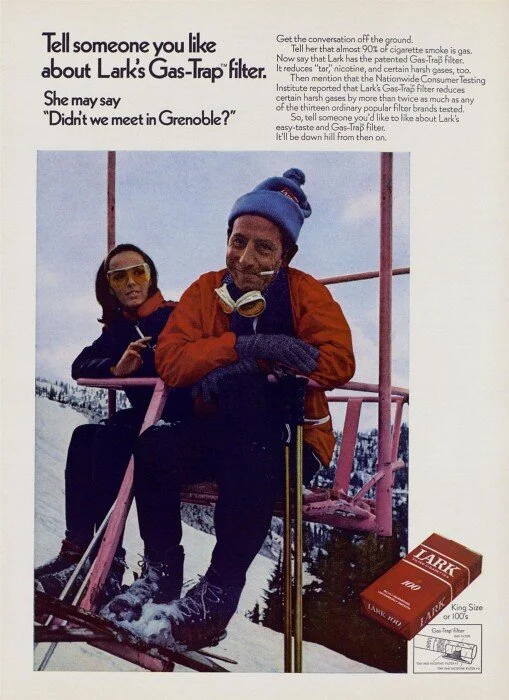
The simplicity of cigarette advertising
I wonder what it was like, back in the halcyon days of advertising, when advertising agencies created advertising for the tobacco industry?
I wonder what it was like, back in the halcyon days of advertising, when advertising agencies created advertising for the tobacco industry?
Below are some great examples of what I consider to be a forgotten craft of creating simple messages that build brands and sell products. After all, cigarettes are a very bizarre product. Small white tubes, stuffed with dried grass and chemicals, are loved or loathed and consumed in vast numbers.
My father smoked on an irregular basis from his bar area on the other side of the house. I could always smell his lit cigarette from my bedroom. It was an inviting scent – masculine and strong. Whenever I smelt it I knew it was time to join my dad at the bar and listen to his stories and share how our days went. I’m not sure why he smoked but it didn’t bother me much. When my friends started to smoke, the scent of burning tobacco took on another emotion for me. They stank of stupidity and the entire house smelt terrible for days. I wasn’t a fan but that’s the power of marketing for you.
In my opinion, it was the advertising agencies who made these ads that are responsible for the success of the tobacco industry. If you want to know why good advertising is so important to your business, take a look at these ads. These simple advertisements created such a dynamic, emotive response in the reader that it was almost impossible to say no to them, regardless of the side effects.